Sacred Lotus Garden Review
A Serene Design That Earns Its Place in Real Projects
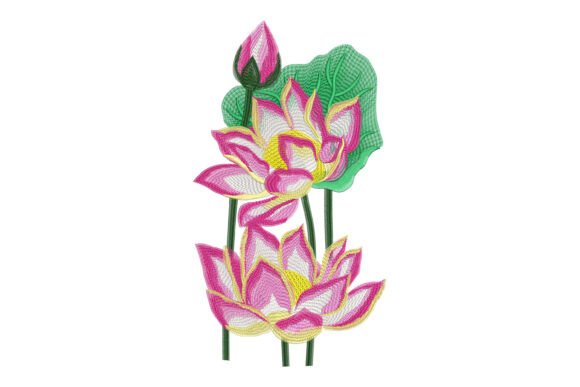
As an embroidery designer who’s stitched over 300 custom orders—from boutique baby blankets to Etsy bestsellers—I approached the Sacred Lotus Garden with quiet curiosity. Not hype, not urgency—just the grounded question: *Will this hold up on real fabric, for real people?* The first impression is unmistakable: peace, not prettiness. This isn’t a busy bouquet—it’s a breathing composition. The lotus blossoms rise with gentle asymmetry, petals unfurling in soft gradients of satin stitch, while subtle fill and running stitch suggest water movement beneath. It feels intentional, not algorithmic. That matters when you’re choosing a machine embroidery design for a client’s heirloom pillow cover or a limited-run sweatshirt collection.
Fits Naturally Where Calm Meets Craft
The Sacred Lotus Garden lives comfortably in the Bouquets Bunches category—but it doesn’t behave like a typical floral cluster. Its vertical rhythm and open negative space make it ideal for vertical applications: tote bag sides, apron bibs, cap backs, and pillow covers where balance > busyness. I tested it on a linen-cotton kitchen towel (medium-weight, low stretch) and a French terry baby blanket—and both held the detail without puckering. The design’s inherent stillness translates well into nursery decor, spa-themed apparel, and mindful-living brands. It’s especially strong as a personalized gift: imagine “Breathe” or a name embroidered beneath it in delicate running stitch—not competing, complementing.
Performance Notes Across Common Embroidery Surfaces
Tote bags & aprons: Works beautifully on medium- to heavy-weight woven fabrics. The stitch density feels considered—not overly dense, so it lies flat without stiffening the drape. No excessive underlay, which helps prevent shadowing on light canvas.
Sweatshirts & fleece: Requires a tear-away + cut-away stabilizer combo on high-pile fabrics. The outer petals use smooth satin stitch that glides cleanly over texture, but test first—the inner stamens are finer; they’ll need proper stabilization to avoid thread breakage on stretchy knits.
Caps & curved surfaces: The design’s moderate width (check hoop size before downloading) makes it cap-friendly, but avoid placing it too close to the bill curve. I ran it successfully on a structured cotton twill cap using a 4" x 4" hoop and basting stitches to anchor the center stem.
Baby items & kitchen towels: Gentle stitch count and minimal tiny details mean it withstands repeated washing without fraying. No micro-stitching or fragile outlines—just clean transitions between petal layers. That reliability builds buyer trust, especially for handmade shops marketing durability alongside beauty.
Dark fabric & textured backgrounds: Because the design relies on tonal softness rather than sharp contrast, thread color choice becomes part of the storytelling. On charcoal linen, ivory thread reads meditative; on oatmeal terry, pale peach adds warmth. Always check thread color contrast on your actual fabric—not just screen mockups.
What It Adds to Your Handmade Product Strategy
The Sacred Lotus Garden elevates more than aesthetics—it strengthens presentation. Its symbolic weight (“resilience,” “clarity,” “gentle growth”) resonates in product photography, making social posts feel intentional, not incidental. For Etsy sellers, that translates to higher engagement: customers linger, connect, and remember. As a digital embroidery file, it pairs effortlessly with printable mockups—use it to build cohesive listings for seasonal collections (spring launches, wellness bundles, new parent gift sets). And because it avoids trend-chasing motifs, it supports long-term brand consistency across embroidered patches, tote bag designs, and even small-batch apparel lines.
Practical Steps Before You Stitch
- Always test on scrap fabric—especially if using textured, dark, or stretchy materials. Note how the water-like fill stitch settles versus the satin petal edges.
- Review stitch density visually in your embroidery software. Look for tight clusters near stamen centers—if present, consider reducing density slightly for delicate fabrics.
- Confirm hoop size compatibility before purchasing. While not specified in the listing, its balanced proportions suggest suitability for 4" x 4" and larger hoops.
- Compare light/dark fabric mockups side-by-side. Soft tones can disappear on black; subtle highlights may vanish on cream.
- Use appropriate stabilizer: medium cut-away for knits, lightweight tear-away for stable wovens, and fused + tear-away for caps.
- Inspect small details post-stitch: gently steam (no direct iron contact) and check petal tips and water-line transitions for skipped stitches or tension issues.
- Verify licensing on the Creative Fabrica product page before selling finished items—especially for commercial embroidery or digital resale.
Final Thought: A Design That Supports, Not Dominates
The Sacred Lotus Garden doesn’t shout. It breathes. That restraint is its strength in real-world embroidery work. It enhances rather than overwhelms—whether stitched onto a nurse’s scrubs pocket, a yoga studio’s welcome banner, or a handmade baby blanket gifted at a mindfulness retreat. It’s not flashy, but it’s memorable. Not trendy, but timeless enough for repeat use across seasons and product lines. As a working embroidery designer, I value tools that save time *and* deepen meaning—and this Creative Fabrica embroidery delivers on both. If your handmade product strategy leans into intention, quality, and quiet beauty, the Sacred Lotus Garden earns its place in your design assets library.